

Best Peptides for Muscle Growth & Fat Loss: Complete Guide [2026]
⚠️ Medical & Legal Disclaimer
This article is for educational and research-information purposes only and does not constitute medical advice. The compounds discussed are sold for laboratory research purposes only. They are not FDA-approved for muscle building, fat loss, athletic performance, or any other human use, and they are not intended for human consumption. Always consult a qualified healthcare professional before making any health decisions.
Key Takeaways
- Muscle peptides work by stimulating the body's natural growth hormone and IGF-1 signaling — not by introducing exogenous hormones the way steroids do.
- CJC-1295 paired with Ipamorelin is the most-studied combination in the literature, with the strongest efficacy signals and the most favorable tolerability.
- BPC-157 and TB-500 are the leading recovery compounds in the research; MK-677 is the main orally bioavailable option, though it's technically a non-peptide secretagogue.
- AOD-9604 and Tesamorelin are the fat-loss compounds. Only Tesamorelin is FDA-approved, and only for HIV-associated lipodystrophy.
- Purity is the biggest safety variable in this category. Require HPLC purity of 98% or higher and a lot-specific Certificate of Analysis.
- These compounds are research-only. Most are not FDA-approved for muscle building or fat loss, and most lack long-term human safety data.
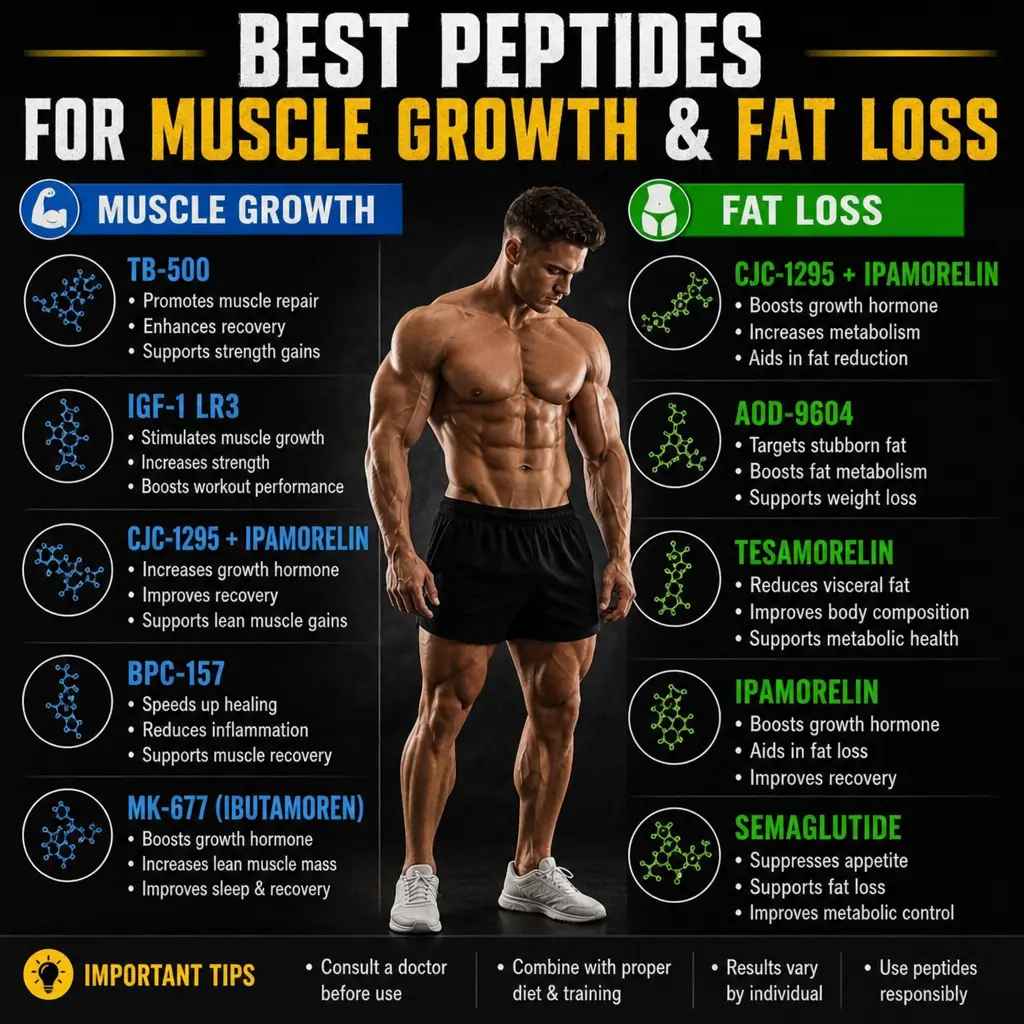
Search "best peptides for muscle growth," and you'll probably get a few ranked shopping lists. That's the wrong frame when it comes to peptide use. The compounds in this guide sit at very different points on the evidence curve. A few have decades of research behind them. Others have animal data and a lot of enthusiasm.
This guide sorts them by what the research supports — mechanism of action for each compound, the clinical and preclinical data, the dosages used in published protocols, and where the evidence runs out. A note on language throughout: "dosage" and "protocol" here refer to the terms used in published studies. They are not recommendations for personal use.
Quick Overview
Synthetic peptides studied for muscle growth are short chains of amino acids that influence the body's natural production of growth hormone and insulin-like growth factor 1 (IGF-1) — the signals involved in muscle protein synthesis and tissue repair. The most-discussed compounds in muscle and recomposition research include CJC-1295/Ipamorelin, IGF-1 LR3, MK-677, BPC-157, TB-500, and Follistatin 344. Each targets a different pathway.
In published research, GH-axis compounds have been associated with roughly 2–3 kg of lean-mass gain over 12 months when studied alongside resistance training (Nass et al., 2008). These compounds are not FDA-approved for muscle building and are sold for research purposes only.
What Are Peptides, and How Do They Work?
Peptides are short chains of 2 to 50 amino acids linked by peptide bonds. They serve as signaling molecules, regulating hormone secretion, immune function, and tissue repair. Unlike full-length proteins, which run 50+ amino acids, peptides are small enough to be rapidly absorbed and to interact with specific cellular receptors that trigger targeted responses.
In muscle and performance research, these peptides work by amplifying the body's own hormonal pathways. Rather than introducing exogenous hormones the way anabolic steroids do, they prompt the pituitary and other tissues to produce their own growth hormone (GH) and IGF-1. That indirect mechanism is why peptides are often studied as having a different risk profile than synthetic hormones. The caveat, covered in detail below: most of them lack long-term human safety data.
Research in the Journal of Clinical Endocrinology & Metabolism has reported that growth hormone-releasing peptides can raise circulating GH several-fold above baseline, with measurable changes in body composition when combined with exercise.
How Peptides Differ from Proteins and Amino Acids
Individual amino acids are single molecules — the building blocks. Peptides are short chains of 2–50 amino acids with specific signaling functions. Proteins are long chains of 50+ amino acids that form structural and functional tissue components.
Peptides sit in the middle: small enough for rapid absorption, complex enough to trigger precise responses that single amino acids can't.
How Do Peptides Build Muscle?
Research points to four main mechanisms. Each class of compound targets one or more of them to create an anabolic environment when studied alongside resistance training.
Growth Hormone Stimulation
GHRPs and GHRH analogs like CJC-1295 stimulate the anterior pituitary to secrete growth hormone in a pulsatile pattern that mimics natural physiology. Elevated GH then triggers the liver to produce IGF-1, the primary mediator of GH's anabolic effects on muscle. Studies in Growth Hormone & IGF Research report GHRP-mediated increases in skeletal-muscle protein-synthesis rates.
IGF-1 Signaling & Protein Synthesis
IGF-1 activates the PI3K/Akt/mTOR pathway — the master regulator of muscle protein synthesis. This cascade increases ribosomal activity and enhances amino-acid uptake. It also promotes satellite-cell activation for fiber repair. IGF-1 LR3 is a longer-acting form that extends the anabolic signaling window.
Myostatin Inhibition
Myostatin acts as a natural brake on muscle growth. Follistatin 344 binds and neutralizes myostatin, removing that brake in research models. Animal studies (PLOS ONE) showed increases in muscle mass independent of exercise — which is why it draws research interest, though human data is limited.
Recovery & Anti-Inflammatory Effects
Healing peptides like BPC-157 and TB-500 are studied for accelerating muscle repair by promoting angiogenesis and reducing inflammatory cytokines at injury sites. In principle, faster recovery supports more consistent training — the fundamental driver of long-term muscle growth. PrymaLab publishes the research detail in its BPC-157 & TB-500 dosing guide and its injury-recovery guide.
Which Peptides Have the Most Muscle-Growth Research Behind Them?
The compounds below target different parts of the anabolic process — GH release, direct muscle-cell signaling, myostatin inhibition, and recovery. They're presented by the strength of their research base, not as a ranked buy list.
CJC-1295 & Ipamorelin
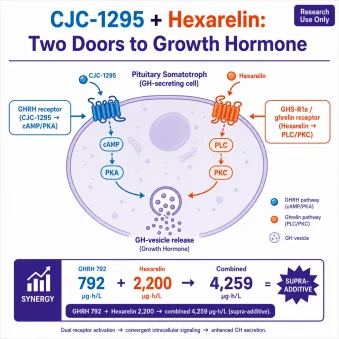
CJC-1295 is a synthetic GHRH analog whose modified structure extends its half-life from minutes to several days. Paired with Ipamorelin — a highly selective GHRP — the two have been studied together for a synergistic effect that amplifies natural GH release without significantly raising cortisol or prolactin. It's the most-studied combination in the GH-peptide literature. Research (Teichman et al., 2006) reports CJC-1295 sustaining elevated IGF-1 for 6–8 days after a single dose.
IGF-1 LR3
IGF-1 LR3 is a modified IGF-1 with an extended half-life — roughly 20–30 hours, versus 12–15 minutes for native IGF-1. It directly activates the mTOR pathway in muscle cells, promoting protein synthesis and satellite-cell proliferation. Research in Frontiers in Nutrition describes IGF-1 signaling as essential for exercise-induced hypertrophy. It's among the more potent compounds studied. Correspondingly, it's the one research handles with the most caution, because of its direct hormonal activity.
MK-677 (Ibutamoren)
MK-677 is an orally active growth hormone secretagogue. Worth flagging up front: it's technically a non-peptide ghrelin mimetic, though it's almost always grouped with muscle peptides. A landmark study (Nass et al., 2008) reported that MK-677 increased fat-free mass by roughly 2 kg and improved physical function in older adults over 12 months. Because it's orally bioavailable, it comes up constantly among oral options. Studies also note improved sleep quality — a factor in both recovery and natural GH secretion.
BPC-157
BPC-157 (Body Protection Compound-157) is a synthetic pentadecapeptide derived from a protein found in gastric juice. It isn't directly anabolic. It's one of the most-studied recovery compounds because research associates it with faster healing from training-induced damage and tendon injury. A 2024 narrative review (PMC) documented its effects on angiogenesis and the nitric-oxide system. It's available for research in both injectable and oral forms — see PrymaLab's BPC-157 listing.
TB-500 (Thymosin Beta-4)
TB-500 is a synthetic version of Thymosin Beta-4, a protein involved in tissue repair and cell migration. It's studied for upregulating actin — a structural protein in fiber repair — and for reducing inflammation. In research it's frequently paired with BPC-157 as a recovery combination. See PrymaLab's TB-500 and combined blend listings.
Follistatin 344
Follistatin 344 is a glycoprotein that binds and blocks myostatin, the primary negative regulator of muscle growth. Animal studies show dramatic muscle-mass increases. Human data is limited, which is why it's better described as a promising research frontier than an established compound.
GHRP-6 & GHRP-2
GHRP-6 and GHRP-2 are hexapeptide GHRPs that stimulate GH secretion via the ghrelin receptor. GHRP-6 is noted for strong GH release and a marked increase in appetite. GHRP-2 provides similar stimulation with less appetite effect. Both are well-studied, with decades of research behind them.
Sermorelin
Sermorelin is a synthetic analog of the first 29 amino acids of natural GHRH. It stimulates pulsatile GH release. It's often described as one of the gentler GH-axis compounds in the research, because of its short half-life and natural cycling pattern. It's studied alongside Ipamorelin or CJC-1295 in clinical peptide-therapy contexts.
Which Peptides Are Studied for Fat Loss?
Fat-loss research targets lipid metabolism through GH-mediated lipolysis or direct fat-cell signaling. Some of the same GH-axis compounds studied for muscle also appear in fat-loss research. That overlap is the basis of the body-recomposition interest. PrymaLab groups these in its weight-loss & metabolic peptides category.
AOD-9604
AOD-9604 is a modified fragment (amino acids 177–191) of human growth hormone that is studied for targeting fat metabolism without affecting blood sugar or promoting growth. Research describes it stimulating lipolysis and inhibiting lipogenesis.
A correction to the claim you'll see everywhere: AOD-9604 was placed on the FDA's Category 2 compounding list in 2023 (significant safety concerns, not permitted in compounding). It was removed from Category 2 in 2024 only because its nominator withdrew the nomination — not because the FDA endorsed it. Human clinical data remains far less extensive than for the GLP-1 agonists.
Tesamorelin
Tesamorelin is a GHRH analog, and the only compound in this section with FDA approval — specifically for reducing excess abdominal fat in HIV-associated lipodystrophy. Clinical trials (Falutz et al.) showed visceral adipose reductions of roughly 15–18% over 26 weeks. It has the most robust clinical data of anything in this section. See PrymaLab's Tesamorelin guide.
CJC-1295/Ipamorelin for Fat Loss
The CJC-1295/Ipamorelin combination is studied for fat loss via elevated GH, which increases lipolysis and fatty-acid oxidation. Research notes this is particularly relevant for visceral fat.
MK-677 for Body Recomposition
MK-677's sustained GH and IGF-1 elevation is associated in research with a favorable body-composition shift. The Nass et al. study documented these changes over 12 months. Its appetite-stimulating effect is a noted variable in fat-loss contexts — and a complicating one.
Peptide Comparison Table: All Compounds Side-by-Side
The table below provides a structured overview of the most-studied compounds for muscle growth and fat loss. Dosages are those reported in published research protocols — here for research reference, not as personal-use recommendations.
| Peptide | Primary Function | Route | Research Dosage (from studies) | Onset | Research Notes | Studied For |
|---|---|---|---|---|---|---|
| CJC-1295/Ipamorelin | GH release (synergistic) | Subcutaneous | 100–300 mcg each, 1–3x/day | 2–4 weeks | Most-studied; favorable tolerability | Overall muscle growth |
| IGF-1 LR3 | Direct anabolic signaling | SC/IM | 20–80 mcg/day | 1–2 weeks | Potent; direct hormonal activity | Advanced hypertrophy |
| MK-677 (Ibutamoren) | Oral GH secretagogue (non-peptide) | Oral | 10–25 mg/day | 1–2 weeks | May affect blood glucose | Oral convenience, sleep |
| BPC-157 | Recovery & healing | SC/Oral | 250–500 mcg/day | 1–2 weeks | Well-tolerated in studies | Injury recovery, joints |
| TB-500 | Tissue repair & flexibility | Subcutaneous | 2–5 mg, 2x/week | 2–3 weeks | Well-tolerated in studies | Muscle/tendon repair |
| Follistatin 344 | Myostatin inhibition | Subcutaneous | 100–200 mcg/day | 3–4 weeks | Limited human data | Maximum hypertrophy (research) |
| GHRP-6 | GH release + appetite | Subcutaneous | 100–300 mcg, 2–3x/day | 1–2 weeks | Marked appetite increase | Bulking research |
| Sermorelin | GHRH analog | Subcutaneous | 200–300 mcg/day | 2–4 weeks | Gentle, natural GH pulsing | Natural GH pulsing |
| AOD-9604 | Fat metabolism | Subcutaneous | 250–500 mcg/day | 4–6 weeks | Mixed human data; see FDA note | Targeted fat loss (research) |
| Tesamorelin | Visceral fat reduction | Subcutaneous | 2 mg/day | 4–8 weeks | FDA-approved (HIV lipodystrophy) | Abdominal fat |
Note: Dosages are from published research protocols, provided for informational purposes only. All peptide research should be conducted under appropriate professional oversight.
What Dosages and Cycles Show Up in the Research?
In research protocols, peptide dosing typically follows a start-low, titrate-by-response principle. Most GH peptides are administered 1–3 times daily via subcutaneous injection. Cycling — alternating use with rest periods — is used in research to limit receptor desensitization and preserve natural hormonal feedback.
Combinations Studied
The combinations most often described in the literature:
- GH-release pair: CJC-1295 (100 mcg) + Ipamorelin (100 mcg) — studied for synergistic GH release, often dosed before sleep.
- Growth + recovery: CJC-1295/Ipamorelin + BPC-157 (250 mcg/day).
- Multi-pathway GH support: CJC-1295/Ipamorelin + MK-677 (15 mg oral) + BPC-157.
- Recomposition: CJC-1295/Ipamorelin + AOD-9604 (300 mcg/day).
Cycling Patterns
Research protocols commonly describe 8–12 weeks on, 4 weeks off. GH-axis compounds like CJC-1295/Ipamorelin have been used for longer windows — 12 to 16 weeks — because they stimulate natural GH rather than replacing it. Recovery compounds like BPC-157 are typically studied over 4–8 weeks against a specific healing target. PrymaLab's peptide calculator and dosing guide document the research math.
Injectable vs Oral: What's the Difference?
Injectable peptides provide high bioavailability — reported at 95%+ in research — and faster onset. Oral peptides offer convenience, but they face breakdown by stomach acid and digestive enzymes. That reduces bioavailability to roughly 30–50% for most compounds.
Reconstitution & Handling in Research
In research settings, peptides are reconstituted from lyophilized (freeze-dried) powder with bacteriostatic water, then handled with sterile technique. Proper sterile technique is essential to avoid contamination. PrymaLab's bacteriostatic water reconstitution guide walks through the process. (This is lab-handling information. It is not a personal-injection instruction.)
Oral Options
Among orally bioavailable options, MK-677 does not require injection. BPC-157 capsules have been studied for gut and systemic anti-inflammatory effects, though injectable BPC-157 is preferred in research for localized musculoskeletal recovery.
| Factor | Injectable | Oral |
|---|---|---|
| Bioavailability | 95–100% | 30–50% (varies) |
| Onset | Minutes to hours | Hours to days |
| Convenience | Requires preparation | Simple administration |
| Cost per Effective Dose | Lower | Higher |
| Best-Studied Options | CJC-1295, Ipamorelin, IGF-1 LR3, TB-500 | MK-677, BPC-157 capsules |
How Are Peptides Combined in Research?
Research and researcher reports describe combining peptides with complementary supplements to address growth and recovery through different mechanisms. Commonly described pairings include CJC-1295/Ipamorelin with creatine monohydrate, and BPC-157 with collagen peptides for connective-tissue support. MK-677 with ZMA also comes up, for sleep.
BCAAs also come up — the reasoning being that GH peptides stimulate increased protein synthesis, and that synthesis needs raw material. PrymaLab's SUPERHUMAN amino blend sits in this supporting-supplement space.
Peptides vs SARMs vs Steroids
These three get confused constantly. Worth noting up front: SARMs and MK-677 are not peptides. They're separate compound classes that simply get discussed alongside them. So where does the "safer" claim stand?
| Factor | Peptides | SARMs | Anabolic Steroids |
|---|---|---|---|
| Mechanism | Stimulate natural hormone production | Bind androgen receptors selectively | Introduce exogenous hormones |
| Testosterone Suppression | Minimal to none | Moderate (dose-dependent) | Severe (requires PCT) |
| Liver Toxicity | Very low | Moderate (oral SARMs) | High (oral steroids) |
| Reported Side-Effect Profile | Mild (water retention, hunger) | Moderate (hormonal disruption) | Severe (multi-organ effects) |
| Muscle-Building Potency | Moderate (indirect) | Moderate–High (direct) | Very High (direct) |
| Legal Status (US) | Legal for research | Legal for research (not for consumption) | Schedule III controlled substance |
| PCT Required? | No | Often yes | Always yes |
Peptides act on the body's natural hormonal systems rather than overriding them. That's why research often describes a different risk profile than steroids — no testosterone suppression, and none of the liver toxicity that oral steroids cause. But "safer" isn't a blanket guarantee. Most performance peptides lack long-term human safety data, and product purity is a major variable. The core distinction holds: peptides are signaling molecules that encourage natural processes. Steroids are synthetic hormones that replace natural production.
Peptides and the Testosterone Axis
Some peptides are studied for indirectly supporting testosterone production. That's a different concept from testosterone replacement therapy (TRT), which introduces exogenous hormone. GH peptides like CJC-1295 and Ipamorelin raise GH and IGF-1, which research suggests may support Leydig-cell function.
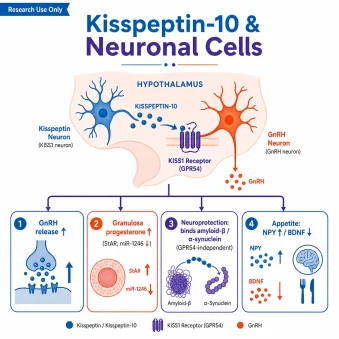
Kisspeptin-10 is studied for directly stimulating the hypothalamic-pituitary-gonadal (HPG) axis, increasing luteinizing hormone and, downstream, testosterone. These are research findings on natural-production pathways. They are not a TRT substitute, and they are not a personal protocol.
Are These Peptides Safe? Side Effects & Safety Profile
The safety picture depends on several factors: the specific compound, the dose, product purity, and whether there's clinical oversight — which matters for anything beyond food or cosmetic peptides. In research and clinical use, the most common effects are mild and transient. The compounds most often described as well-tolerated in the literature are BPC-157, Ipamorelin, TB-500, and Sermorelin.
-
1Water Retention & Bloating
GH peptides can cause temporary water retention in the first 2–4 weeks. More pronounced with GHRP-6 and MK-677.
-
2Increased Appetite
GHRP-6 and MK-677 raise appetite via ghrelin-receptor activation.
-
3Injection-Site Reactions
Mild redness, swelling, or itching with subcutaneous use.
-
4Numbness & Tingling
Related to fluid shifts; typically mild.
-
5Blood-Sugar Effects
GH has anti-insulin effects. MK-677 in particular has been linked to mild increases in fasting glucose, and monitoring is noted in the research.
-
6Joint Stiffness
Related to fluid retention; generally mild.
⚠️ Safety Note
The primary safety variable for research peptides isn't the molecule. It's source and manufacturing quality. Contaminated or counterfeit peptides can carry harmful impurities or wrong doses — and, at worst, bacterial contamination. That's why third-party purity testing (HPLC and mass spectrometry) and a lot-specific Certificate of Analysis matter so much. Never use peptides from unverified sources.
What Results Do the Studies Report?
Outcomes vary with the compound, the dose, the duration, and the training and nutrition around it. Much of the timeline data comes from a small number of studies. Peptides are studied as an enhancer of the training response — not a replacement for it.
In the research, changes are typically described in stages. Sleep and recovery improvements show up early. Strength and performance changes follow over several weeks. Body-composition changes come later.
The clearest anchor is Nass et al. (2008): roughly 2 kg of fat-free-mass gain over 12 months with MK-677 in older adults. Reports of 3–5 kg lean-mass gain over 3–6 months come from clinical GH-peptide settings combined with structured training. Individual results vary considerably.
How Much Do Research Peptides Cost?
For research use, sourcing is the single biggest safety and reliability variable. The market runs from pharmaceutical-grade suppliers all the way down to outright counterfeit operations.
Cost Ranges Reported Across the Research-Chemical Market
- Budget: BPC-157 and TB-500, roughly $30–80 per vial (5–10 mg)
- Mid-range: CJC-1295, Ipamorelin, and GHRP-6, roughly $40–120
- Premium: IGF-1 LR3 and Follistatin 344, roughly $80–300+
In the US, these are sold as research chemicals without a prescription and are not approved for human consumption.
What to Require in a Supplier
When evaluating where to source research peptides, require third-party HPLC purity testing (98% or higher), mass-spectrometry verification, a Certificate of Analysis for each batch, proper cold-chain shipping, and transparent business practices. PrymaLab maintains these standards across its catalog — see the research hub for documentation.
Are These Peptides Legal?
In the US, most peptides are legal to purchase and possess for research. They are not controlled substances, unlike anabolic steroids (Schedule III). But they are not FDA-approved for muscle building or fat loss. Tesamorelin is the exception, approved for HIV-associated lipodystrophy.
On compounding: in 2023 the FDA placed several peptides — including BPC-157 and AOD-9604 — in Category 2, meaning significant safety concerns and not permitted in compounding. AOD-9604 was removed from Category 2 in 2024 only because its nominator withdrew the nomination. BPC-157 remains restricted. Athletes should also note that most of these compounds are prohibited by WADA and banned in sport (USADA, NCAA, and similar bodies). Always verify current regulations in your jurisdiction.
⚠️ Medical & Legal Disclaimer
This article is for educational and research-information purposes only and does not constitute medical advice. The compounds discussed here are sold for laboratory research only. They are not FDA-approved for muscle building, fat loss, athletic performance, or any other human use, except where noted (Tesamorelin). Always consult a qualified healthcare professional before making any health decisions. PrymaLab provides research-grade peptides for qualified researchers and does not encourage or endorse use for purposes not approved by regulatory authorities.
Frequently Asked Questions About Peptides for Muscle Growth
Below are the most frequently asked questions about peptides for muscle growth and fat loss, answered based on current research and clinical evidence.
The compounds with the strongest research base include CJC-1295/Ipamorelin (GH release), IGF-1 LR3 (muscle-cell signaling), MK-677/Ibutamoren (oral GH secretagogue, technically a non-peptide), BPC-157 (recovery), and Follistatin 344 (myostatin inhibition). CJC-1295/Ipamorelin is the most-studied combination, noted for strong efficacy signals and favorable tolerability.
Research shows certain peptides can influence muscle growth through GH, IGF-1, and protein-synthesis pathways. Nass et al. (2008) reported that MK-677 increased fat-free mass by roughly 2 kg over 12 months. The consistent finding across the literature: they work as an addition to resistance training and nutrition, not a replacement for either.
SARMs bind androgen receptors directly to mimic testosterone. Peptides work indirectly, by stimulating natural hormone production. Research describes peptides as generally having fewer side effects, with no direct testosterone suppression, while SARMs carry liver-toxicity and suppression risks. Neither is FDA-approved for muscle building, and SARMs are not peptides.
Reported timelines start with sleep and recovery improvements in 1–2 weeks, strength changes at 3–4 weeks, visible body-composition changes at 6–8 weeks, and maximum results around 12–16 weeks. These come from limited data and vary widely between individuals.
The main risk in the research isn't the compound — it's contaminated or counterfeit product. With verified, third-party-tested material, reported side effects are mild, such as injection-site reactions and water retention. Purity and sourcing are the safety variables that matter most.
The most-studied are AOD-9604 (lipolysis without blood-sugar effects), Tesamorelin (FDA-approved for visceral fat in HIV lipodystrophy), CJC-1295/Ipamorelin (GH-mediated lipolysis), and MK-677 (body-composition shift). AOD-9604 is notable for targeting fat without appetite effects, though its human data is limited and it isn't FDA-approved for weight loss.
Research reports injectable delivery at 95%+ bioavailability, versus 30–50% for most orals. MK-677 is orally bioavailable. BPC-157 comes in both forms.
Roughly $30–80 per vial for BPC-157 and TB-500. CJC-1295/Ipamorelin runs $40–120, and IGF-1 LR3 climbs to $80–300+. Monthly research costs commonly land between $50 and $300, depending on the protocol.
The compounds most often described as well-tolerated are BPC-157, Ipamorelin, TB-500, and Sermorelin. They act on natural pathways, which research associates with fewer adverse effects. This is not a safety guarantee — long-term human data is limited.

Explore Research-Grade Peptides at PrymaLab
PrymaLab offers research-grade peptides — GH peptides, recovery compounds, metabolic agents, and skin-focused compounds — all third-party HPLC tested to 98% purity or higher. Browse the research hub or the weight-loss & metabolic category.
Browse Peptide Products →References & Further Reading
The following peer-reviewed sources were used in the preparation of this article. All citations link to PubMed, PMC, or official publisher databases for verification.
- Nass R, Pezzoli SS, Oliveri MC, et al. "Effects of an oral ghrelin mimetic on body composition and clinical outcomes in healthy older adults: a randomized trial." Ann Intern Med. 2008;149(9):601–611. PubMed: 18981485
- Sikiric P, et al. Pentadecapeptide BPC 157 enhances the growth hormone receptor expression in tendon fibroblasts." Molecules. 2018;23(7):1513. PMC: 6271067
- Goldspink G. "Mechanical signals, IGF-I gene splicing, and muscle adaptation." Physiology. 2005;20:232–238. PMC: 4665094
- Murphy MG, et al. "Effect of the orally active growth hormone secretagogue MK-677 on body composition and bone mineral density in older adults." J Clin Endocrinol Metab. 2001;86(3):1116–1125. PMC: 6240568
- Sikiric P, et al. "The stable gastric pentadecapeptide BPC 157: pleiotropic activities and its emerging role in gastrointestinal and liver diseases." Curr Pharm Des. 2024. PMC: 11053547
- Bowers CY. "Growth hormone-releasing peptide (GHRP)." Cell Mol Life Sci. 1998;54(12):1316–1329. PubMed: 9893710
- Lee SJ, McPherron AC. "Regulation of myostatin activity and muscle growth." Proc Natl Acad Sci USA. 2001;98(16):9306–9311. PubMed: 11459935
- Teichman SL, et al. "Prolonged stimulation of growth hormone (GH) and insulin-like growth factor I secretion by CJC-1295, a long-acting analog of GH-releasing hormone." J Clin Endocrinol Metab. 2006;91(3):799–805. PubMed: 16352683
- Heffernan M, et al. "The effects of human GH and its lipolytic fragment (AOD9604) on lipid metabolism following chronic treatment in obese mice and beta(3)-AR knock-out mice." Endocrinology. 2001;142(12):5182–5189. PubMed: 11713213
- FDA. "Bulk Drug Substances Under Section 503A — Category 2 (BPC-157, AOD-9604)." U.S. Food and Drug Administration, 2023–2024.